If you’re someone who struggles with back pain or tightness, you’re not alone. In our sedentary lifestyles, it’s all too easy for our muscles to become stiff and inflexible, leading to discomfort and even injury.
Fortunately, there’s a simple and effective solution: foam rolling. This self-myofascial release technique has gained immense popularity in recent years, and for good reason.
By applying gentle pressure to specific areas of the body, foam rolling can help alleviate muscle tension, improve flexibility, and promote overall well-being.
Benefits of Foam Roller Exercises for Back Pain Relief and Flexibility
Foam rolling offers a multitude of benefits, particularly when it comes to addressing back pain and enhancing flexibility.
Here are just a few reasons why you should consider incorporating foam roller exercises into your routine:
- Relieves Muscle Tension: The gentle pressure applied during foam rolling helps to release knots and adhesions in the muscle fibers, reducing tension and promoting relaxation.
- Improves Flexibility: By breaking down the tightness and restrictions in your muscles, foam rolling can increase your range of motion, making it easier to perform daily activities and exercise routines.
- Promotes Circulation: The rolling motion helps to increase blood flow to the targeted areas, delivering essential nutrients and oxygen to the muscles while flushing out metabolic waste.
- Enhances Recovery: Foam rolling can aid in the recovery process after intense workouts or physical activities, helping to alleviate muscle soreness and reduce the risk of injury.
- Cost-Effective and Time-Effective: Compared to professional massage therapy, foam rolling is an affordable and convenient option that you can perform in the comfort of your own home.
How to Use a Foam Roller Safely
Before we dive into the top foam roller exercises for back pain relief, it’s important to understand how to use this tool safely and effectively.
Here are some guidelines to keep in mind:
- Start Slowly: If you’re new to foam rolling, begin with gentle pressure and shorter durations to allow your body to adjust to the sensation.
- Breathe Deeply: Inhale and exhale deeply as you roll, allowing your muscles to relax and release tension more easily.
- Avoid Bony Areas: Steer clear of rolling directly over bony prominences, such as the spine or knees, as this can cause discomfort or injury.
- Listen to Your Body: Pay attention to any areas that feel particularly tight or tender, and adjust the pressure and duration accordingly.
- Stay Hydrated: Foam rolling can be physically demanding, so make sure to drink plenty of water before and after your session.
Top 10 Foam Roller Exercises for Back Pain Relief
Now that you understand the basics of foam rolling, let’s dive into the top 10 foam roller exercises that can help alleviate back pain and improve flexibility.
Exercise 1: Upper Back Roll
- Sit on the floor with the foam roller positioned horizontally behind your upper back.
- Lean back onto the roller, supporting your head with your hands.
- Gently roll up and down, focusing on the area between your shoulder blades.

Exercise 2: Lower Back Roll
- Lie on your back with the foam roller positioned under your lower back.
- Cross your arms over your chest and engage your core muscles.
- Roll slowly up and down, targeting the area just above your hips. Here are some lower back toning exercises to try without a foam roller!
Exercise 3: Thoracic Spine Roll
- Lie on your side with the foam roller positioned under your mid-back.
- Extend your top arm overhead and use your bottom arm to support your head.
- Gently roll up and down, targeting the thoracic spine area.
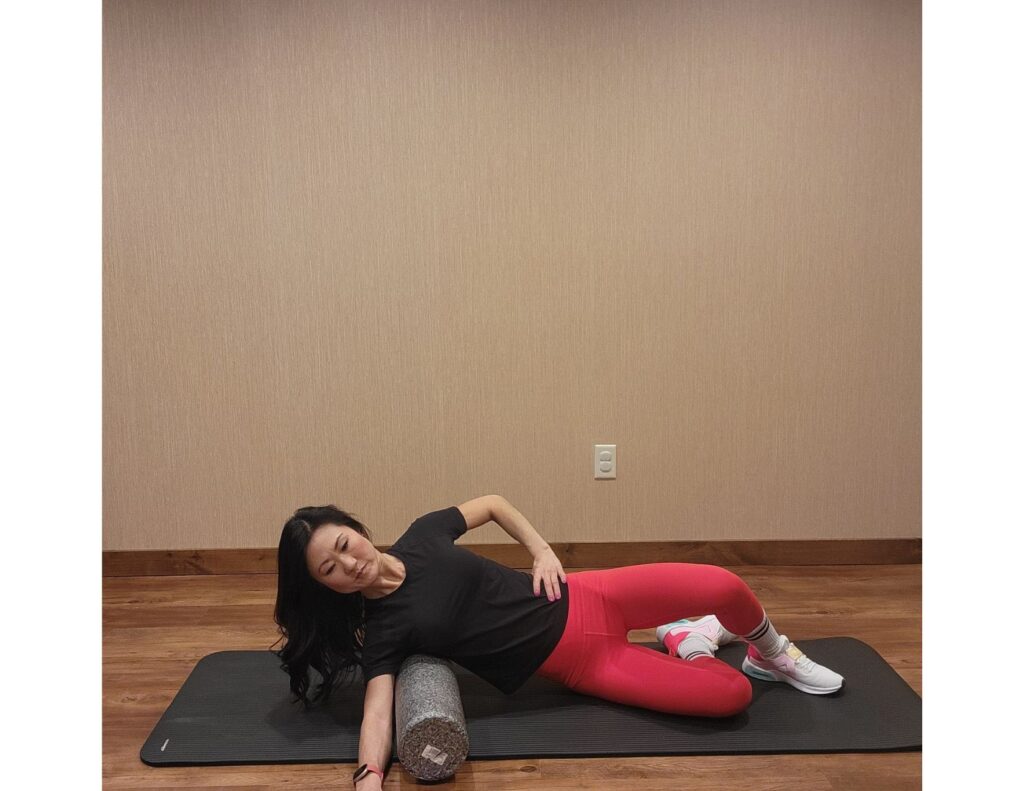
Exercise 4: Latissimus Dorsi Roll
- Lie on your side with the foam roller positioned under your armpit.
- Extend your top arm overhead and use your bottom arm to support your head.
- Roll back and forth, focusing on the area between your armpit and lower back.
Exercise 5: Piriformis Roll
- Sit on the floor with the foam roller positioned under your glutes.
- Cross one leg over the other and lean to the side, applying pressure to the piriformis muscle.
- Roll back and forth, targeting the area just beneath your hip bone.
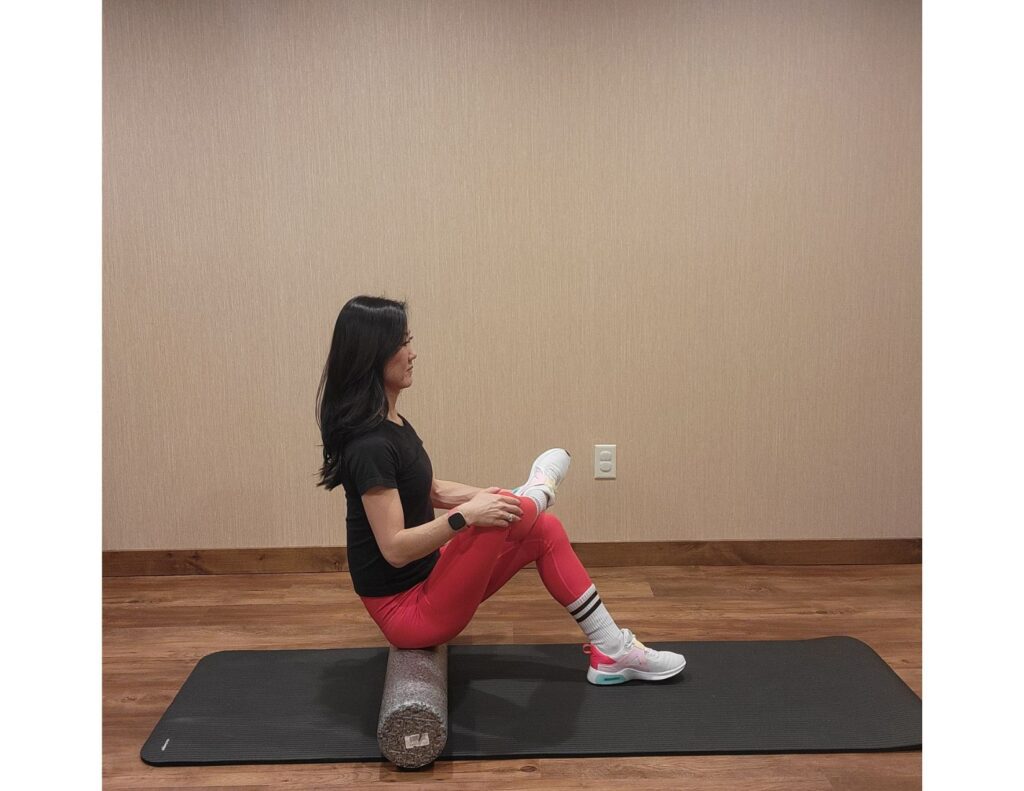
Exercise 6: Glute Roll
- Lie on your back with the foam roller positioned under your glutes.
- Cross one leg over the other and engage your core muscles.
- Roll back and forth, targeting the entire glute area.
Exercise 7: Hamstring Roll
- Sit on the floor with the foam roller positioned under your thighs.
- Engage your core and lean back slightly, supporting your upper body with your hands.
- Roll up and down, focusing on the back of your thighs.
Exercise 8: IT Band Roll
- Lie on your side with the foam roller positioned under your outer thigh.
- Support your upper body with your elbow and roll back and forth, targeting the iliotibial band.
- Repeat on the other side.
Exercise 9: Quadriceps Roll
- Lie on your stomach with the foam roller positioned under your thighs.
- Support your upper body with your forearms and roll back and forth, targeting the front of your thighs.
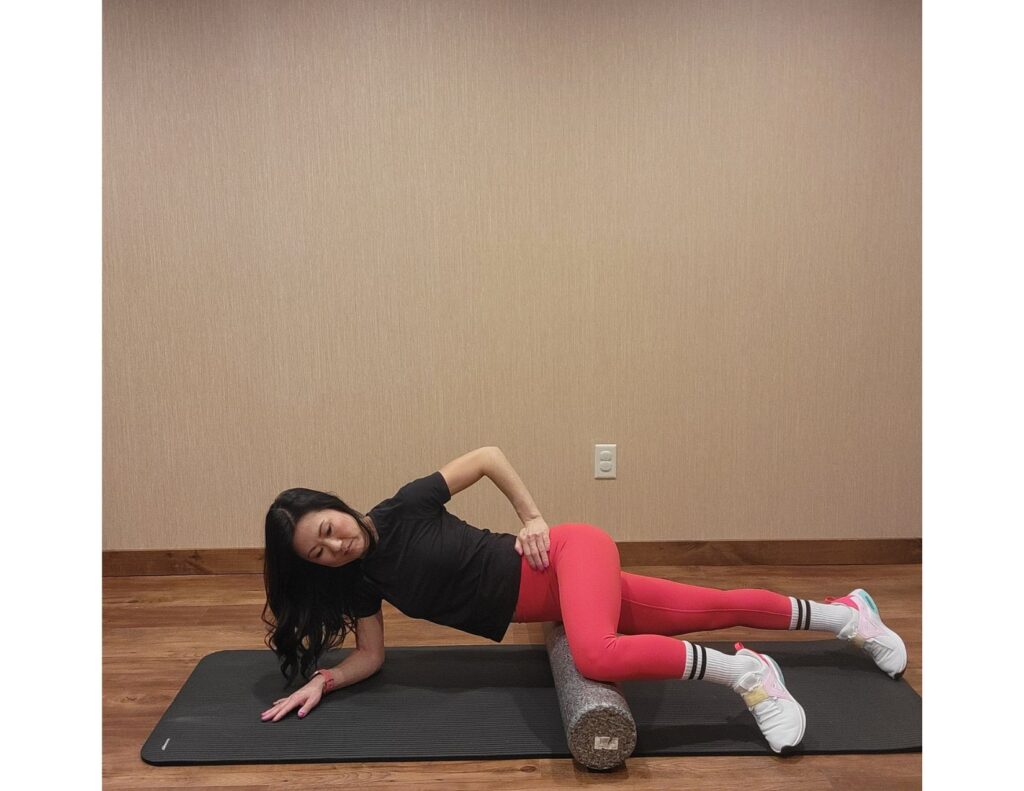
Exercise 10: Hip Flexor Roll
- Kneel on the floor with the foam roller positioned under your hip flexors.
- Lean forward, applying pressure to the front of your hip area.
- Roll back and forth, targeting the hip flexor muscles.
Foam Roller Exercises for Beginners
If you’re new to foam rolling, it’s best to start with a gentle approach.

Here are some beginner-friendly exercises to help you ease into the practice:
- Calf Roll: Sit on the floor with your legs extended and the foam roller positioned under your calves. Roll back and forth, applying gentle pressure.
- Quadriceps Roll (Modified): Lie on your side with the foam roller positioned under your thighs. Roll back and forth, focusing on the front of your thighs.
- Upper Back Roll (Seated): Sit on the floor with the foam roller positioned behind your upper back. Lean back, supporting your head with your hands, and roll gently up and down. Looking for more upper back toning exercises?
Remember, it’s essential to listen to your body and adjust the pressure and duration as needed. Foam rolling should never cause intense pain or discomfort.
Here are some additional back exercises specifically for women to check out!
Common Mistakes to Avoid While Foam Rolling
While foam rolling can be a valuable tool for alleviating back pain and improving flexibility, it’s important to avoid certain mistakes that could potentially lead to injury or diminish the effectiveness of the exercises.
Here are some common pitfalls to watch out for:
- Rolling Too Quickly: Take your time and roll slowly, allowing your muscles to release tension gradually.
- Applying Too Much Pressure: Start with gentle pressure and gradually increase as your body becomes more accustomed to the sensation.
- Holding Your Breath: Remember to breathe deeply and consistently throughout the foam roller exercises.
- Rolling Over Bony Areas: Avoid rolling directly over bony prominences, such as the spine or knees, as this can cause discomfort or injury.
- Neglecting Proper Form: Maintain proper alignment and engage your core muscles to ensure the exercises are performed correctly and safely.
Tips to Enhance Your Foam Rolling Routine
While foam rolling is a relatively straightforward practice, there are a few tips and tricks that can help you get the most out of your routine:
- Combine with Stretching: Incorporate dynamic and static stretches before and after foam roller exercises to further enhance your flexibility and range of motion.
- Stay Hydrated: Drink plenty of water with additional electrolytes before and after your foam roller exercises to aid in muscle recovery and prevent cramping.
- Experiment with Different Positions: Try different positions and angles to target specific muscle groups more effectively and see what works best for YOU!
- Use a Variety of Foam Rollers: Explore different types of foam rollers, such as textured or vibrating rollers, to provide additional benefits.
- Incorporate into Your Warm-up and Cool-down: Foam rolling can be an excellent addition to your warm-up routine before exercise or as a cool-down activity after a workout.
How Often Should You Use a Foam Roller?
The frequency of performing foam roller exercises can vary depending on your individual needs and goals. As a general guideline, it’s recommended to foam roll at least 2-3 times per week, focusing on the areas that feel particularly tight or sore.
If you have specific areas of concern or are recovering from an injury, you may benefit from more frequent foam rolling sessions. However, it’s important to listen to your body and allow for adequate rest and recovery between sessions.
Additionally, it’s advisable to consult with a healthcare professional, such as a physical therapist or sports medicine specialist, to develop a personalized foam rolling routine that aligns with your specific needs and goals.
Best Foam Rollers for Back Pain Relief and Flexibility
When it comes to selecting a foam roller, there are several options available on the market.
Here are some of the best foam rollers for back pain relief and improved flexibility:
- OPTP Pro Foam Roller: This high-density foam roller is durable and effective for targeting muscle tension and knots.
- TriggerPoint GRID Foam Roller: With its unique grid pattern, this foam roller provides deep tissue massage and helps to increase blood flow.
- LuxFit Premium High-Density Foam Roller: This affordable option offers a smooth surface and firm density, making it suitable for various foam rolling exercises.
- RumbleRoller Textured Muscle Foam Roller: The textured surface of this foam roller provides additional stimulation and can help to break up stubborn knots and adhesions.
- Vypor Vibrating Foam Roller: Combining foam rolling with vibration technology, this roller can enhance muscle relaxation and recovery.
When selecting a foam roller, consider factors such as density, surface texture, and size to find the option that best suits your needs and preferences.
If you’re ready to experience the benefits of foam rolling for back pain relief and improved flexibility, consider investing in a high-quality foam roller today.

Conclusion: Integrating Foam Rolling into Your Daily Routine
Incorporating foam rolling into your daily routine can be a game-changer for alleviating back pain and improving flexibility.
By following the top 10 foam roller exercises outlined in this article and adhering to proper technique and safety guidelines, you can unlock the numerous benefits of this self-myofascial release technique.
Remember, consistency is key when it comes to seeing lasting results. Make foam rolling a regular part of your wellness routine, and you’ll soon experience the transformative effects it can have on your overall well-being.
So, what are you waiting for? Grab your foam roller, and let’s embark on a journey towards a more pain-free, flexible, and empowered you!

Pingback: DIY Magnesium Lotion Recipe: A Simple Guide to Boost Your Wellness Naturally
Pingback: Psoas Stretch Release 101: Your Path to a Pain-Free, Flexible Core